PIONEER Dual Split 18000 BTU or PIONEER Quantum Hyperformance 18? Which PIONEER Model to Buy
As an Amazon Associate we earn from qualifying purchases. Links on this page are affiliate links.
You are deciding between the pioneer dual split 18000 btu vs quantum hyperformance 18. Both units offer 18,000 BTU cooling and carry Energy-Star certification. The main difference lies in their design and connectivity. One model supports two zones with Wi-Fi control, while the other is a single-zone unit with higher efficiency ratings. Your choice depends on whether you need to cool multiple rooms or prioritize peak energy savings.
Key differences
| Aspect | Pioneer Quantum Hyperformance 18k BTU | Pioneer Dual Split 18000 BTU 24 SEER2 |
|---|---|---|
| Number of Zones | Single zone | Multi (2) Zone |
| Efficiency Rating | 23.5 SEER2 | 24 SEER2 |
| Smart Control | Not listed | Wi-Fi enabled |
| Voltage | 230V | 208 - 230-Volt |
| Indoor Unit Width | 43.1 inches | 32.3 inches |
Which one should you choose?
Choose Pioneer Quantum Hyperformance 18k BTU if
- You need to cool two separate rooms with one outdoor unit
- You want remote control via Wi-Fi from your smartphone
- You prefer a narrower indoor unit that fits tight wall spaces
Choose Pioneer Dual Split 18000 BTU 24 SEER2 if
- You are cooling a single large room or open area
- You want the highest possible SEER2 rating for efficiency
- You do not require smart home integration features
Verdict: Choose the Dual Split if you need to serve two zones with Wi-Fi control. Pick the Quantum Hyperformance if you only need one zone and want the best efficiency rating. Both provide reliable 18,000 BTU cooling for your space.
Dual Split vs Quantum Hyperformance
Number of zones
The Pioneer Dual Split 18000 BTU 24 SEER2 supports two indoor zones. It connects two wall-mounted units to one outdoor condenser. This setup allows you to cool two separate rooms independently. The Pioneer Quantum Hyperformance 18k BTU is a single-zone system. It includes one indoor unit for one specific area. If you need to manage temperatures in two distinct spaces, the Dual Split offers the flexibility you require. The Quantum model is designed for a single room only.
Efficiency rating
Efficiency matters for your electricity usage. The Pioneer Dual Split 18000 BTU 24 SEER2 achieves a 24 SEER2 rating. This indicates strong energy performance for cooling. The Pioneer Quantum Hyperformance 18k BTU has a 23.5 SEER2 rating. While both are Energy-Star certified, the Dual Split model holds a slight edge in efficiency numbers. You will see a small difference in operational costs over time. The higher SEER2 value suggests the Dual Split converts more power into cooling output.
Smart control
Connectivity options differ between these two Pioneer models. The Dual Split 18000 BTU 24 SEER2 includes Wi-Fi capabilities. You can control it remotely using a smartphone app or smart home system. The Quantum Hyperformance 18k BTU data does not list Wi-Fi or smart features. It relies on standard wireless remote control for local operation. If you want to adjust settings from outside your home, the Dual Split is the practical choice for modern convenience.
Voltage compatibility
Power requirements vary slightly for installation. The Quantum Hyperformance 18k BTU requires a strict 230V supply. The Dual Split 18000 BTU 24 SEER2 accepts a range of 208 to 230 Volts. This wider voltage range offers more flexibility if your home electrical system is not perfectly standardized. Both units operate on 60 hertz single-phase power. The Dual Split provides a broader compatibility window for different household electrical setups.
Indoor unit size
Physical dimensions affect where you can mount the unit. The Quantum Hyperformance 18k BTU indoor unit is 43.1 inches wide. The Dual Split 18000 BTU 24 SEER2 indoor unit is 32.3 inches wide. The Dual Split unit is significantly narrower. This compact width allows for installation in tighter spaces or on smaller walls. The Quantum model is wider and may require more wall space. Consider your available wall area when choosing between these two sizes.
Choose the right Pioneer mini split
You need to cool two separate rooms
The Dual Split model supports two zones. It connects two indoor units to one outdoor condenser. This lets you control the temperature in each room independently. The Quantum Hyperformance is a single-zone unit. It only cools one space. If you have two areas to manage, the Dual Split is the correct choice for your home.
You want smart Wi-Fi control features
The Dual Split includes built-in Wi-Fi capabilities. You can control the system remotely using a wireless remote controller. The Quantum Hyperformance data does not mention smart connectivity. If remote management via your phone or network is important to you, the Dual Split offers this convenience. The Quantum unit lacks this specific feature in its listed specs.
You need a simpler single-zone solution
The Quantum Hyperformance is designed for a single zone. It provides 18,000 BTU of cooling for one room. It covers 500 to 750 square feet. Its efficiency rating is 23.5 SEER2. If you only need to cool one space, this unit is sufficient. It avoids the complexity of managing multiple zones. It is a straightforward option for single-room cooling needs.
The products compared

Pioneer Quantum Hyperformance 18k BTU
Best for: medium rooms needing strong heating
- Cooling Capacity
- 18,000 BTU
- Efficiency Rating
- 23.5 SEER2
- Voltage
- 230V
- Coverage Area
- 500~750 sq ft
- Heat Pump
- Hyper Heat Pump
- Dimensions
- 8.75 × 43.1 × 13 inches
View on Amazon: Pioneer Quantum Hyperformance 18k BTU Affiliate link
This Pioneer unit delivers 18,000 BTU of cooling and heating for spaces between 500 and 750 square feet. It operates on 230V power and achieves a 23.5 SEER2 efficiency rating. The Hyper Heat Pump technology supports year-round comfort. Its physical dimensions are 43.1 inches wide, 13 inches high, and 8.75 inches deep. It suits you if you need reliable climate control for a medium-sized room.
Pros
- 18,000 BTU cooling capacity
- 23.5 SEER2 efficiency rating
- Hyper Heat Pump for heating
- 230V electrical compatibility
Cons
- No Wi-Fi connectivity listed
- Smaller SEER2 rating than the Dual Split model
- Larger physical footprint than competitors
Good fit if
- You need a 18,000 BTU unit for a 500-750 sq ft area
- You have a 230V electrical circuit available
- You prioritize heating performance with Hyper Heat technology
Skip if
- You require smart Wi-Fi control features
- You want the highest SEER2 efficiency available
- You need a more compact indoor unit
Verdict: Pioneer Quantum Hyperformance 18k BTU is a solid choice for medium rooms needing strong heating, though it lacks the smart features and peak efficiency of the Dual Split option.
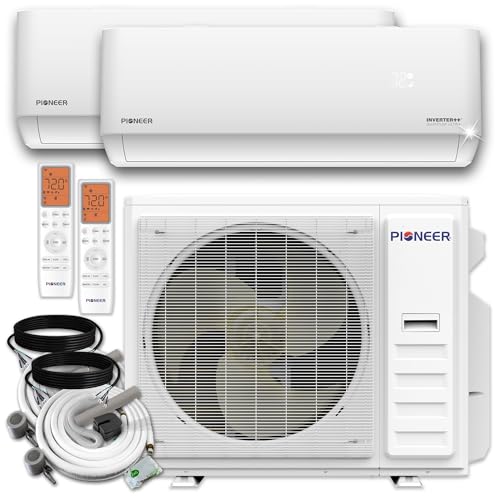
Pioneer Dual Split 18000 BTU 24 SEER2
Best for: Cooling two separate rooms with one unit
- Cooling Capacity
- 18000 BTU 1.5-Ton
- Efficiency Rating
- 24 SEER2
- Voltage
- 208 - 230-Volt
- Number of Zones
- Multi (2) Zone
- Heat Pump
- Heat Pump
- Mounting Type
- Wall Mount
View on Amazon: Pioneer Dual Split 18000 BTU 24 SEER2 Affiliate link
This is a 1.5-ton dual-zone heat pump with 18,000 BTU total cooling capacity. It delivers 24 SEER2 efficiency and uses Wi-Fi control. The system includes two 9,000 BTU indoor units for separate rooms. It heats efficiently down to -13°F outdoor temperatures. You get a complete installation set with pre-charged R454-B refrigerant. This model suits you if you need to cool two distinct spaces with one outdoor condenser.
Pros
- 24 SEER2 cooling efficiency rating
- Dual-zone capability for two rooms
- Wi-Fi smart control included
- Heats effectively at -13°F ambient
Cons
- Heavier 140-pound outdoor unit
- Requires 208-230V electrical connection
- No mention of smartphone app support
Good fit if
- You need to cool two separate rooms
- You want high seasonal efficiency ratings
- You have existing 230V power lines
Skip if
- You only need to cool one room
- You only have standard 115V outlets
- You prefer a single-zone unit
Verdict: Pioneer Dual Split 18k BTU 2-Zone offers dual-zone flexibility with high efficiency for two-room setups. It fits you if you need separate climate control for two spaces without installing two separate systems.
Specifications side by side
| Spec | Pioneer Quantum Hyperformance 18k BTU | Pioneer Dual Split 18000 BTU 24 SEER2 |
|---|---|---|
| Cooling Capacity | 18,000 BTU | 18000 BTU 1.5-Ton |
| Efficiency Rating | 23.5 SEER2 | 24 SEER2 |
| Voltage | 230V | 208 - 230-Volt |
| Coverage Area | 500~750 sq ft | not stated |
| Number of Zones | not stated | Multi (2) Zone |
| Heat Pump | Hyper Heat Pump | Heat Pump |
| Mounting Type | not stated | Wall Mount |
| Smart Control | not stated | Wi-Fi |
| Dimensions | 8.75 × 43.1 × 13 inches | 7.63 × 32.3 × 12 inches |
| Weight | not stated | 140 pounds |
| Size | 500~750 sq ft | Dual Split 18000 BTU 1.5-Ton |
| Color | not stated | White |
| Model | not stated | WYT020GLSI24M2-9W16-9W16 |
Frequently asked questions
Which Pioneer model is best for heating a medium room?
The Pioneer Quantum Hyperformance 18k BTU is the better choice for medium rooms needing strong heating. It is designed to handle these specific conditions effectively. While the Dual Split offers dual-zone flexibility, the Quantum Hyperformance focuses on delivering robust heating performance for single medium-sized spaces without the complexity of multiple zones.
Do I need Wi-Fi for the Pioneer Dual Split 18000 BTU?
Wi-Fi is a built-in feature of the Pioneer Dual Split 18000 BTU 24 SEER2. It allows you to control the unit remotely via smart devices. This connectivity adds convenience for managing two separate zones. If you do not require remote access, you can still operate the unit using standard controls, but the Wi-Fi capability is included.
What are the physical dimensions of the Pioneer Quantum Hyperformance 18k BTU?
The Pioneer Quantum Hyperformance 18k BTU measures 43.1 inches in width, 13 inches in height, and 8.75 inches in length. These dimensions are important for ensuring the unit fits your wall space. The wider width compared to the Dual Split model may affect your mounting options, so measure your installation area carefully before deciding.
Can the Pioneer Dual Split 18000 BTU cool two rooms at once?
Yes, the Pioneer Dual Split 18000 BTU is designed to cool two separate rooms. It connects two indoor wall-mounted units to a single outdoor condenser. This dual-zone setup allows you to control the temperature in each room independently. It is ideal if you need separate climate control for two spaces without installing two separate systems.
Which model is lighter and easier to mount?
The Pioneer Dual Split 18000 BTU weighs 140 pounds and is wall-mounted. Its compact dimensions of 32.3 inches wide and 12 inches high make it suitable for standard wall installations. The Quantum Hyperformance is wider at 43.1 inches. Consider the weight and size constraints of your wall when choosing between the two models for installation.
Is the Pioneer Quantum Hyperformance suitable for large open spaces?
The Pioneer Quantum Hyperformance 18k BTU is rated for spaces between 500 and 750 square feet. This makes it suitable for medium-sized rooms rather than large open areas. If your space exceeds 750 square feet, you may need a higher capacity unit. The Dual Split model shares the same 18,000 BTU capacity, so it also fits within this range.
Does the Dual Split model support smart home integration?
The Pioneer Dual Split 18000 BTU includes Wi-Fi smart control capabilities. This allows you to integrate the unit with your smart home system for remote management. You can adjust settings and monitor performance from your devices. The Quantum Hyperformance does not list Wi-Fi or smart features in its specifications, making the Dual Split the choice for tech-enabled control.