Cozeware vs TURBRO Mini Splits: Which Brand Fits You?
As an Amazon Associate we earn from qualifying purchases. Links on this page are affiliate links.
When comparing cozeware vs TURBRO mini split units, you look at two 12,000 BTU systems. Both offer heating and cooling for small rooms. The main difference is voltage and efficiency. Cozeware uses 230V with 20 SEER2. TURBRO uses 115V with 24 SEER2. You must check your electrical setup first. The voltage choice dictates which unit fits your home. Both brands include smart controls and inverter technology for steady performance.
Key differences
| Aspect | Cozeware 12000 BTU 230V Mini Split | TURBRO 12,000 BTU Mini Split, 24 SEER2 |
|---|---|---|
| Voltage | 230V | 115V |
| Efficiency Rating | 20 SEER2 | 24 SEER2 |
| Smart Control | WiFi, Voice Control, Cozeware APP | Alexa, App control |
| Heating Capacity | Heating System | 12,300 BTU |
| Warranty | 5-year parts, 7-year compressor | 5-year dedicated support |
Which one should you choose?
Choose Cozeware 12000 BTU 230V Mini Split if
- You have a dedicated 230V circuit available for installation.
- You want a longer compressor warranty of seven years.
- You prefer a unit with a built-in timer and seven fan speeds.
Choose TURBRO 12,000 BTU Mini Split, 24 SEER2 if
- You need to plug the unit into a standard 115V outlet.
- You want the highest efficiency rating for lower energy use.
- You need a system that operates in extreme temperatures from -13°F to 125°F.
Verdict: Choose Cozeware if your electrical panel supports 230V and you value a longer compressor warranty. Select TURBRO if you are limited to standard 115V outlets or need higher seasonal efficiency. Your available voltage is the primary deciding factor.
Cozeware vs TURBRO Mini Split Comparison
Voltage and wiring
Cozeware uses a 230V system, while TURBRO runs on 115V. This is a major decision point for you. A 230V unit like the Cozeware typically requires a dedicated circuit similar to a dryer or electric stove. You need professional installation to handle the higher voltage. TURBRO’s 115V model plugs into a standard wall outlet. This makes TURBRO easier to install if you lack high-voltage wiring. However, 230V often supports better performance in extreme conditions. You must check your home’s electrical panel before choosing. If you have existing 230V lines, Cozeware fits well. If not, TURBRO saves you wiring costs.
Energy efficiency
TURBRO offers a 24 SEER2 rating, which is higher than Cozeware’s 20 SEER2. SEER2 measures cooling efficiency over a season. A higher number means less electricity for the same cooling output. TURBRO’s inverter system prevents frequent on-off cycling, which saves energy. This helps maintain steady temperatures. Cozeware also uses inverter technology and includes three ECO modes to adjust power based on room conditions. Both units are efficient, but TURBRO’s higher rating suggests lower long-term power costs. You will pay slightly more upfront for TURBRO’s efficiency. Cozeware provides good value with its 20 SEER2 rating. Check your local electricity rates to see the real savings.
Smart control options
Both brands include WiFi and app control. Cozeware features a built-in WiFi module and supports voice control. You can use the Cozeware app to adjust temperatures remotely. It also includes a classic infrared remote for manual control. TURBRO integrates with Alexa for voice commands. You can pre-heat or pre-cool your home via the app. TURBRO also includes a dedicated app for remote management. Cozeware offers seven fan speeds and eight modes for detailed control. TURBRO highlights iCLEAN and I-FEEL modes for air quality and comfort. Both provide modern smart features. Cozeware gives you a physical remote as a backup. TURBRO focuses on voice integration. Both are strong in connectivity.
Operating temperature range
TURBRO specifies an operational range from -13°F to 125°F. This heated chassis design allows it to work in extreme cold. You can set temperatures between 60°F and 90°F. Cozeware does not list its minimum operating temperature in the provided data. This makes direct comparison difficult. TURBRO’s wide range suggests better performance in very cold winters. You can rely on it for heating even when it is freezing outside. Cozeware is designed for medium-to-small indoor spaces. It works well for year-round comfort in moderate climates. If you live in a region with harsh winters, TURBRO’s specs offer more assurance. Check local climate data before deciding.
Noise level
Cozeware lists a sleep mode noise level of 31dB. This is very quiet and suitable for bedrooms. You will experience soft, whisper-quiet airflow during the night. TURBRO does not provide a specific decibel rating in the data. It mentions that the inverter-driven system operates quietly by reducing cycling. Both units aim for low noise. Cozeware gives you a concrete number to judge comfort. 31dB is comparable to a quiet library. TURBRO’s claim of quiet operation is general. You may need to check other sources for TURBRO’s exact noise level. For sensitive sleepers, Cozeware’s stated 31dB is a clear advantage. TURBRO likely competes well, but Cozeware provides verified data.
Which Mini Split Brand Fits Your Needs
Renters or homes with standard outlets
TURBRO runs on 115V, fitting standard wall outlets without new wiring. Its 24 SEER2 rating offers higher efficiency than Cozeware’s 20 SEER2. This means lower energy use for the same cooling output. The included 13ft line set simplifies setup. It is ideal if you cannot install a dedicated 230V circuit.
Users seeking ultra-quiet sleep performance
Cozeware drops noise to 31dB in sleep mode, quieter than TURBRO’s specs. Its 4D air swing distributes airflow evenly for full coverage. The unit includes a classic infrared remote for direct control. If you value silent operation and multi-directional airflow in bedrooms or studios, Cozeware’s design prioritizes comfort.
Buyers needing extreme weather durability
TURBRO features a heated chassis that allows operation down to -13°F. This range is wider than typical units. It maintains steady temperatures in harsh cold. The 24 SEER2 efficiency keeps costs down while providing robust heating. If you live in a cold climate, this weather resistance is a key advantage.
The products compared
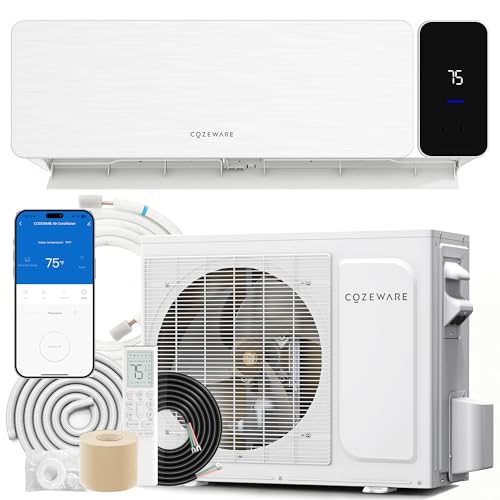
Cozeware 12000 BTU 230V Mini Split
Best for: 230V-powered rooms needing smart control
- Cooling Capacity
- 12,000 BTU
- Efficiency Rating
- 20 SEER2
- Voltage
- 230V
- Coverage Area
- Up to 750 sq ft
- Smart Connectivity
- WiFi, App control
- Smart Control
- Wi-Fi
View on Amazon: Cozeware 12000 BTU 230V Mini Split Affiliate link
This Cozeware unit offers 12,000 BTU cooling and heating with a 20 SEER2 efficiency rating. It requires a 230V electrical connection. You get smart control via the Cozeware app and voice commands, plus a standard remote. The indoor unit weighs 72.1 pounds and measures 31.7 inches wide. It runs quietly at 31dB in sleep mode. This system suits medium-to-small rooms needing reliable year-round climate control.
Pros
- 20 SEER2 efficiency rating for energy savings
- Smart control via WiFi, app, and voice
- Ultra-quiet 31dB operation in sleep mode
- Includes 5-year parts and 7-year compressor warranty
Cons
- Requires 230V power, limiting placement options
- Heavier indoor unit at 72.1 pounds
- No mention of Bluetooth connectivity
Good fit if
- You have a 230V outlet available
- You want smart app and voice control
- You need quiet operation for bedrooms
Skip if
- You only have 115V outlets
- You prefer a lighter wall unit
- You need Bluetooth-only control
Verdict: Cozeware 12k BTU 230V Mini Split delivers solid efficiency and smart features for users with 230V power. It is a strong option for quiet, smart-controlled comfort in medium rooms.

TURBRO 12,000 BTU Mini Split, 24 SEER2
Best for: Standard 115V outlets and medium rooms
- Cooling Capacity
- 12,000 BTU
- Efficiency Rating
- 24 SEER2
- Voltage
- 115V
- Coverage Area
- up to 750 Sq Ft
- Heat Pump
- Heat Pump
- Smart Connectivity
- WiFi, Alexa, App
View on Amazon: TURBRO 12,000 BTU Mini Split, 24 SEER2 Affiliate link
The TURBRO 12,000 BTU mini split uses a 115V circuit and achieves a 24 SEER2 efficiency rating. It cools spaces up to 750 sq ft and heats down to -13°F. Smart app and Alexa control allow remote adjustments. The unit includes a 13ft line set and holds certifications for reliability. It suits users who need standard electrical compatibility with high seasonal efficiency.
Pros
- 24 SEER2 efficiency rating for reduced energy use
- 115V voltage fits standard household outlets
- Operates in temperatures from -13°F to 125°F
- Includes 13ft copper line set for easier installation
Cons
- Lower 115V voltage limits capacity compared to 230V models
- Lacks 230V circuit for higher performance in larger spaces
- Heavier and bulkier than compact alternatives
Good fit if
- You have a standard 115V outlet available for installation
- You need efficient cooling for a room up to 750 sq ft
- You want smart control via app or Alexa
Skip if
- You require a 230V circuit for higher power demand
- You need to cool a space larger than 750 sq ft
- You prefer a unit with a higher SEER2 rating
Verdict: TURBRO 12k BTU 115V 24 SEER2 offers solid efficiency for standard 115V circuits. It fits users who prioritize energy savings and smart features in medium-sized rooms.
Specifications side by side
| Spec | Cozeware 12000 BTU 230V Mini Split | TURBRO 12,000 BTU Mini Split, 24 SEER2 |
|---|---|---|
| Cooling Capacity | 12,000 BTU | 12,000 BTU |
| Efficiency Rating | 20 SEER2 | 24 SEER2 |
| Voltage | 230V | 115V |
| Coverage Area | Up to 750 sq ft | up to 750 Sq Ft |
| Heat Pump | not stated | Heat Pump |
| Smart Connectivity | WiFi, App control | WiFi, Alexa, App |
| Smart Control | Wi-Fi | Wi-Fi |
| Dimensions | 7.91 × 31.7 × 10.9 inches | 7.9 × 32.6 × 11.8 inches |
| Weight | 72.1 pounds | not stated |
| Size | 12000 BTU 230V | not stated |
| Color | White | not stated |
| Model | MACozewareQae6Q | B0GQ24GXDH |
Frequently asked questions
Which mini split is more energy efficient, Cozeware or TURBRO?
TURBRO is more efficient. Its 12,000 BTU unit achieves a 24 SEER2 rating. Cozeware’s comparable model offers 20 SEER2. Higher SEER2 values indicate better energy conversion. You will likely see lower power consumption with the TURBRO system for the same cooling output.
Can I plug a Cozeware mini split into a standard outlet?
No, you cannot. The Cozeware 12,000 BTU model requires a 230V power source. Standard household outlets provide 115V. You need a dedicated 230V circuit for installation. If your home only has standard outlets, this unit is not compatible without electrical upgrades.
Is TURBRO compatible with standard 115V outlets?
Yes, TURBRO is compatible. Its 12,000 BTU mini split runs on 115V power. This voltage matches standard wall outlets in many homes. You can install it without requiring a specialized 230V circuit. This makes it a practical choice for renters or older wiring.
What is the size difference between the Cozeware and TURBRO units?
The TURBRO unit is slightly wider and taller. Cozeware measures 31.7 inches wide and 10.9 inches tall. TURBRO measures 32.6 inches wide and 11.8 inches tall. Both have similar depth at roughly 7.9 inches. The weight difference is minimal, with Cozeware at 72.1 pounds.
Which brand is better for a room with only 115V power?
TURBRO is the better choice. It operates on 115V, fitting standard electrical setups. Cozeware requires 230V, which is not available in all rooms. If you lack a 230V line, TURBRO allows immediate installation. It also offers higher efficiency at 24 SEER2 compared to Cozeware’s 20 SEER2.
Do both brands offer 12,000 BTU cooling capacity?
Yes, both offer 12,000 BTU capacity. This rating suits small to medium-sized rooms. Both units provide heating and cooling functions. The difference lies in power requirements and efficiency ratings. You get similar cooling power, but TURBRO uses less energy per unit of cooling due to its higher SEER2.